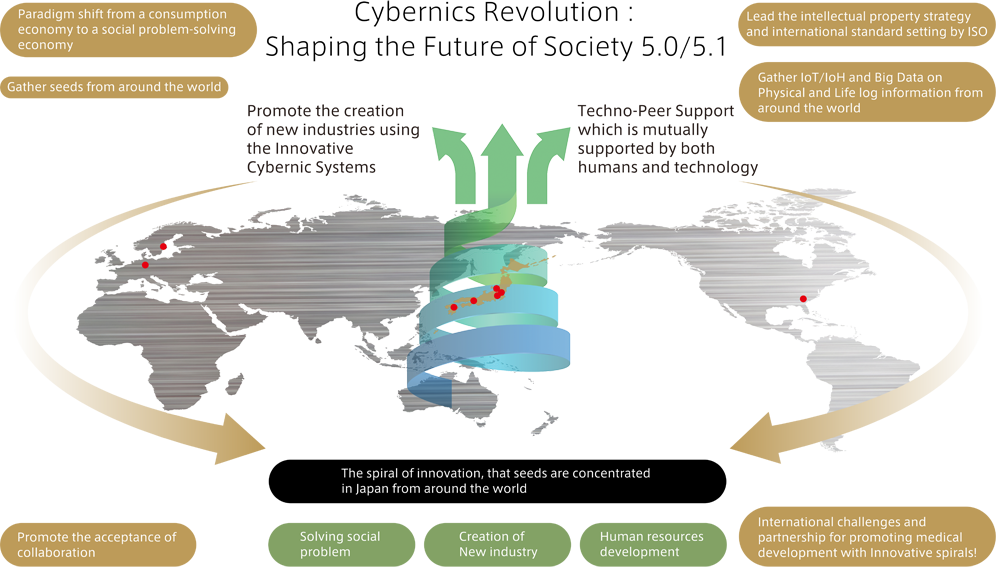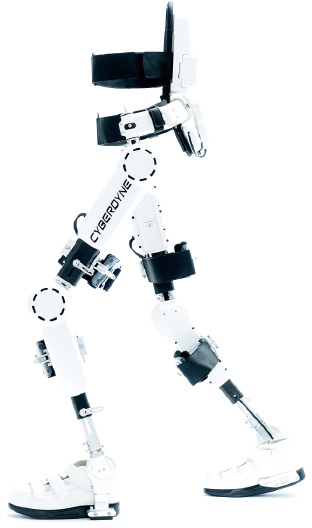
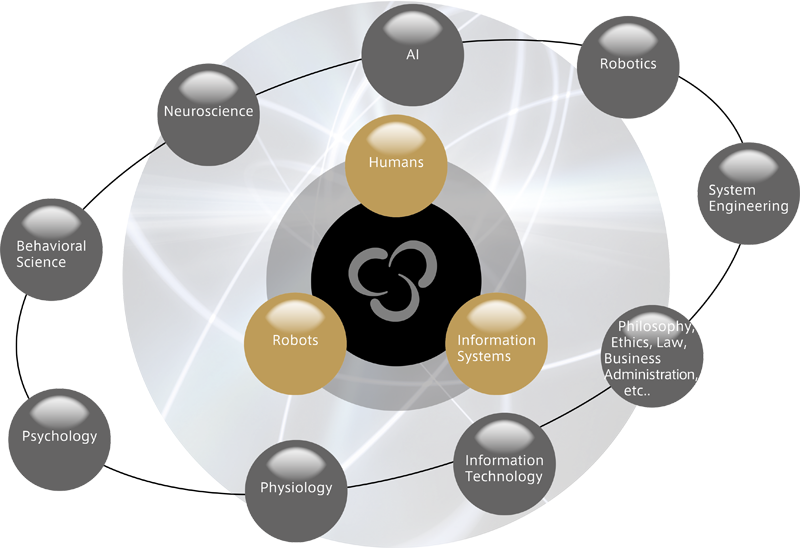





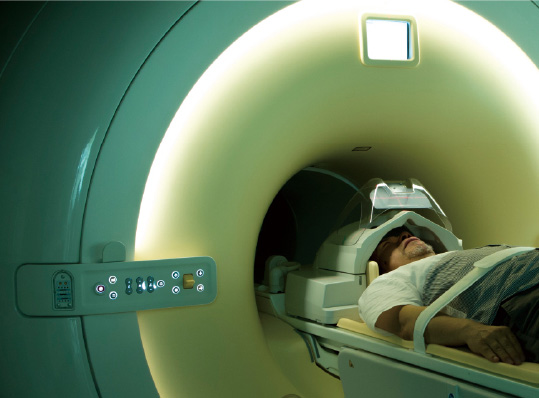
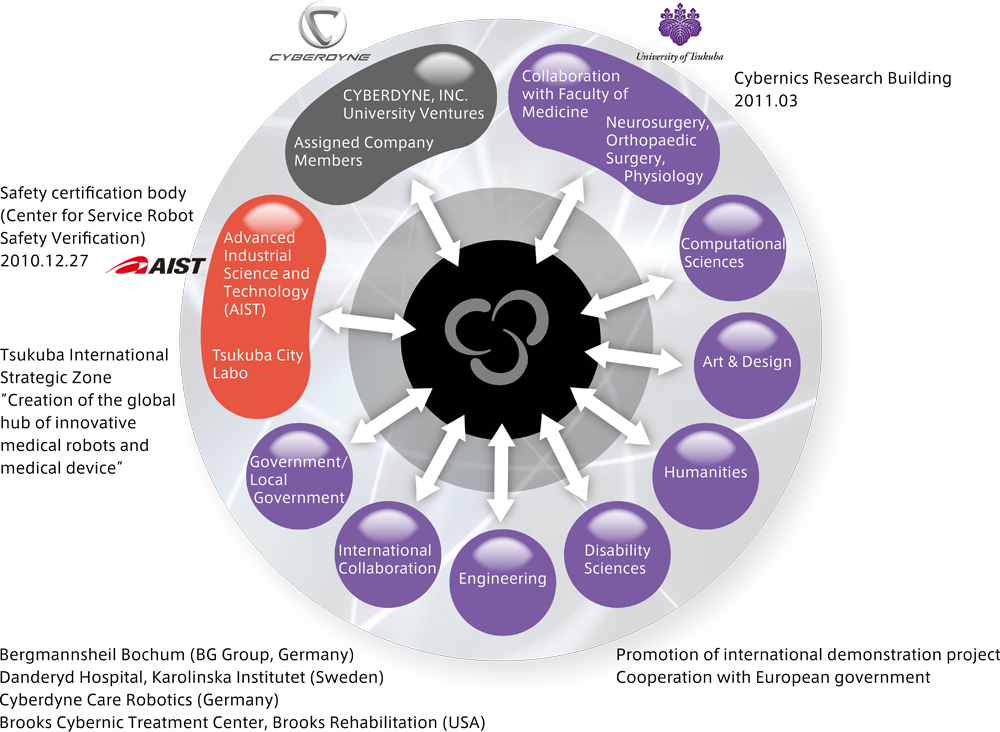
We are dynamically developing “Cybernics” by collaborating and cooperating with several different departments within the University of Tsukuba, as well as with other domestic and overseas universities and various private industries such as CYBERDYNE INC.We propose a “Techno-Peer Support”, which is mutually supported by both humans and technology, and challenge to accomplish our mission creating “Society 5.0/5.1” by our comprehensive organization, ‘Center for Cybernics Research’.



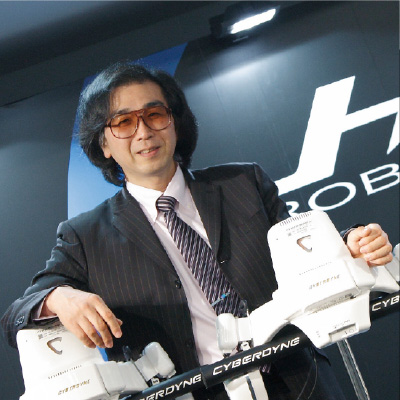

Executive Research Director
Yoshiyuki SankaiTitle
Professor of the Institute of Systems and Information Engineering,
Executive Research Director at the Center for Cybernics
Research,
Director at the R&D Center for Frontiers of MIRAI in
Policy and Technology, University of Tsukuba
President and CEO of CYBERDYNE, Inc.
Program Director of SIP (Strategical Innovation Promotion Program) promoted by the Cabinet Office of the Government of Japan
Profile
Yoshiyuki Sankai earned a Ph.D. in Engineering from the
University of Tsukuba in Japan in 1987.
He has progressed from being a research fellow at the
Japan Society for the Promotion of Science (“JSPS”) to
assistant professor, associate professor, and then
professor at the Graduate School of Systems and
Information Engineering, University of Tsukuba.
Dr. Sankai is also a visiting professor at Baylor College of
Medicine in Houston, Texas in the United States.
Currently, he is a professor, the Executive Research
Director at the Center for Cybernics Research and the
Director at the F-MIRAI for the University of Tsukuba, the
President and CEO of CYBERDYNE Inc., and a Program
Director of SIP promoted by the Cabinet Office of the Government
of Japan.
He was appointed as a leader of the Global COE (Center
of Excellence) program for Cybernics, by MEXT (Ministry
of Education, Culture, Sports, Science and Technology of
Japan)(2007-2012).
He was selected as one of the top 30 Japanese scientists
and his research plan/project obtained financial support
from the “Funding Program for World Leading Innovative
R&D on Science and Technology”(2010-2014). He was a
Program Manager of the Impulsing Paradigm Change
through Disruptive Technologies (“ImPACT”) program
(2014-2018), initiated by the Cabinet Office of Japan, and
also Business producer of Program for Building Regional
Innovation Ecosystem by Ministry of Education, Culture,
Sports, Science and Technology (“MEXT”). And he was
Director of Center for Cybernics Research (2011-2017).
He also served as an Executive Board Member of
Advanced Robotics, a member of Global Agenda Council
on Robotics & Smart Devices, a Center Partner of the
Center for the Fourth Industrial Revolution, a member of
the Global Future Council of Production, and a member
of the Global Precision Medicine Council of the WEF.Now,
he is a fellow of the Robotics Society of Japan (“RSJ”)
and the Society of Instrument and Control Engineers
(“SICE”). And he is also appointed as an International
Fellow of the Royal Swedish Academy of Engineering
Sciences (“IVA”).
Dr.Sankai led the intellectual property strategy and
international standard setting by ISO and IEC as an
expert member of the committee on the medical robotics
field and personal-care robotics field.
He has pioneered innovative cyborg-type robot
technology in a new academic field, “Cybernics: the
fusion and combination of humans, robots and AI/information systems,” and established a social
problem-solving venture company “CYBERDYNE, Inc.” in
2004.
In March 2014, the company was listed in the “Mothers”
section of the Tokyo Stock Exchange, as the first
company to issue class shares in Japan.
In addition, due to its distinctive advanced technology
and growth probability, the company was awarded
FY2013’s ”IPO of the Year” and FY2014’s “Innovative
Equity Deal of the Year” by Thomson Reuters Market,
becoming the first company ever to receive an award two
years in a row.
Now, Dr. Sankai is acting as a core member of the
Ministry of Land, Infrastructure, Transport and Tourism’s
Smart City Project/Tsukuba Promotion Council, as well
as a founding core member of the Tsukuba Conference.
He has received numerous awards, including: The 2005
World Technology Award (2005), Good Design Gold Award
(2006), Award from the Minister of Economy(2007), the
21st century Invention Award from Japan Institute of
Invention and Innovation (2009) , Gold Prize of 2014
Edison Awards, DealWatch Awards 2013 IPO of the Year
(Thomson Reuters) (2014), DealWatch Awards 2014
Innovative Equity Deal of the Year (Thomson Reuters)
(2015), the 7th Robot Award (Ministry of Health, Labour
and Welfare award) (2016), the Prime Minister’s Award
(the third Nippon Venture Awards) (2017) , MEXT Award
in the 7th Technology Management and Innovation
Awards(2019), Ichimura Prize in Industry for
Distinguished Achievement(2019), The Medal of Honor
with Purple Ribbon(2019) awarded by the Emperor,
Intellectual Property Achievement Awards, Minister of
Economy, Trade and Industry Awards(2020) and many
more.


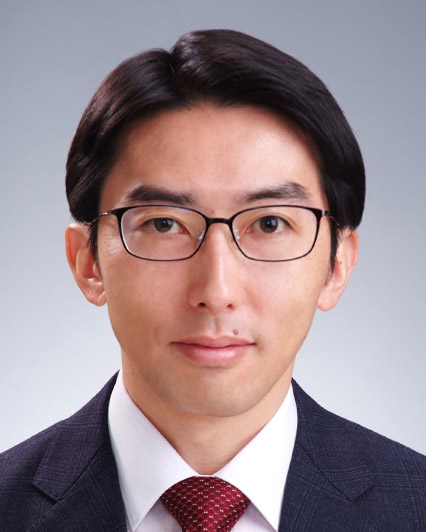

Director of Center
Yoshihiro KurodaTitle
Professor of the Institute of Systems and Information Engineering,
Director of Center for Cybernics Research,
Principle Investigator of Life Engineering Laboratory,
University of Tsukuba.
Profile
He is currently a Professor of the Institute of Systems and Information Engineering, Director of Center for Cybernics Research and also Principle Investigator of Life Engineering Laboratory, University of Tsukuba.
He received the B.S. in Integrated Human Studies, M.S. and Ph.D. in Informatics from Kyoto University, Kyoto, Japan, in 2000, 2003 and 2005, respectively.
He was a Project Assistant Professor with the Grad. Sch. of Medicine, Kyoto University, Kyoto from 2005 to 2006. From 2006 to 2013, he was an Assistant Professor with the Grad. Sch. of Engineering Science, Osaka University, Osaka. From 2013 to 2016, he was an Associate Professor with the Cybermedia Center, Osaka University, Osaka.
From 2016 to 2019, he was an Associate Professor with the Grad. Sch. of Engineering Science, Osaka University, Osaka.
In 2019, he joined the University of Tsukuba, and is now a director of the Center for Cybernics Research, University of Tsukuba.
He is served as elected board members of the Virtual Reality Society of Japan, Human Interface Society of Japan, and
Japanese Society of Medical Virtual Reality.
His primary research interests include biomedical simulation, sensory feedback technologies, Cybernics, biomedical image processing, medical artificial intelligence, medical systems, and assistive systems with a seamless fusion of cyber and physical spaces.
He has published more than 180 peer-reviewed papers.
He is currently a member of IEEE and ACM.



Vice Director of Center
Hiroaki KawamotoTitle
Professor, Institute of Systems and Information Engineering, University of TsukubaVice Director, Center for Cybernics Research, University of Tsukuba
Profile
In 2004, Hiroaki Kawamoto completed the Doctoral Program in Intelligent Interaction Technologies at the Graduate School of Systems and Information Engineering, University of Tsukuba, and received his Ph.D. in Engineering. After serving as a Research Resident at the Japan Association for the Advancement of Medical Equipment, he joined the University of Tsukuba as an Assistant Professor in April 2009. He was promoted to Associate Professor in April 2015 and Professor in December 2024. In 2025, he conducted research as an Affiliated Researcher in Advanced Robotics at the Istituto Italiano di Tecnologia(IIT). In the same year, he participated in the 11th Japan Biodesign Fellowship, working toward the creation and societal implementation of innovative medical devices and technologies.
His research is grounded in Cybernics, an interdisciplinary field that integrates humans, AI robots, and information systems. He specializes in human–robot integration technologies that establish a bidirectional connection between human intent and robot motion. He established the fundamental principles of integrated human–robot control for the wearable cyborg HAL. He also built an integrated medical–engineering research framework involving physicians and healthcare professionals, advancing innovative robotic treatment technologies from clinical translation and safety technology development to international standardization and societal implementation through a university spin-off company. He is currently extending these achievements into Human-Cyber-Physical Systems(HCPS)to create a new paradigm of human-collaborative robotics in which people and autonomous robots mutually adapt and cooperate.
During his doctoral studies, he investigated integrated human–robot control technologies that connect people with wearable robots through bioelectrical signals and human motion information, thereby forming a sensorimotor interaction loop between them. Through this research, he established the fundamental principle of voluntary control, enabling a wearable robot to move according to the wearer’s intent, and built the technological foundation for the integrated control of the wearable cyborg HAL. In 2004, he participated as a founding member of CYBERDYNE Inc., a university spin-off company established to translate research outcomes into societal applications.
He subsequently systematized human–robot integration technologies and developed a hybrid control architecture that combines voluntary control reflecting human intent with autonomous control generated by the robot. This architecture was implemented in the wearable cyborg HAL and further developed into technologies for supporting, improving, and regenerating physical functions.
After joining the University of Tsukuba, he led the establishment of an integrated medical–engineering research framework for HAL and advanced innovative robotic treatment technologies from research and development to clinical application. Within NEDO’s Project for the Practical Application of Service Robots, he contributed to the development and validation of safety technologies for wearable personal-care robots and to the establishment of ISO 13482, the international standard specifying safety requirements for personal-care robots.
Since 2015, he has participated in an investigator-initiated clinical trial of HAL for cerebrovascular disorders. His responsibilities included data analysis, clinical-trial protocol development, study operations, and regulatory activities toward medical-device approval. He has also promoted the application of human–robot integration technologies to a broader range of medical conditions.
He is currently extending the human–robot integration technologies developed through HAL research into Human-Cyber-Physical Systems(HCPS), which integrate human, cyber, and physical spaces. His research focuses on mobility robots that transport people and robotic arms that assist human activity in living environments. These systems communicate human state and intent to the robot while feeding sensory and environmental information perceived by the robot back to the person, thereby creating a bidirectional sensorimotor loop. Under the third phase of Japan’s Cross-ministerial Strategic Innovation Promotion Program(SIP), he serves as Principal Investigator for the development of foundational technologies supporting the wider societal deployment of human-collaborative robotics.
His laboratory is guided by three principles—Connection, Cycle, and Resonance. It seeks to connect humans, AI robots, and information systems at an advanced level, circulate information and action among them, and bring their interactions into resonance. Through this approach, the laboratory aims to pioneer new research domains that enhance human and societal capabilities.